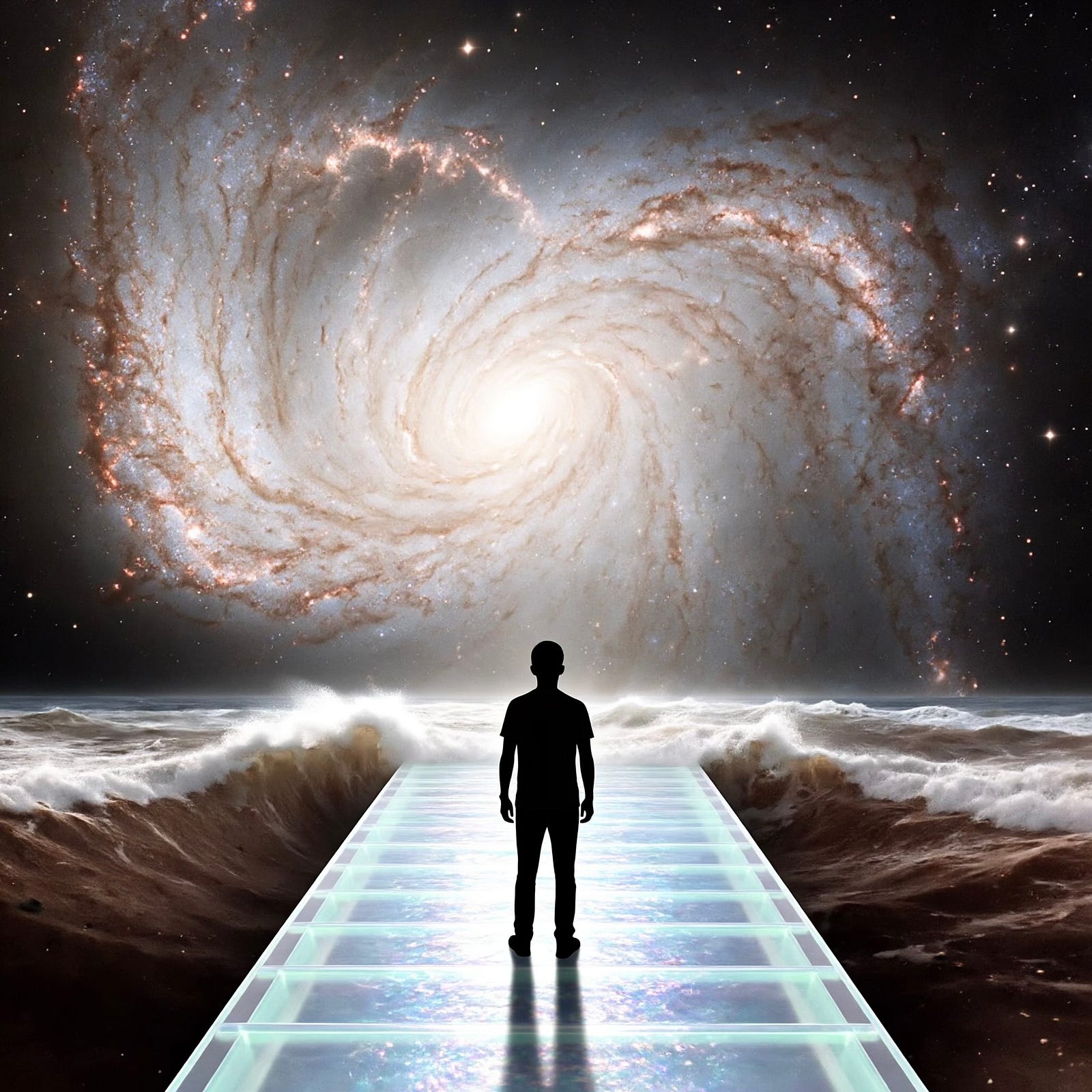
This week I have read the first 2 chapters of Carl Sagan’s masterpiece “Cosmos” and watched the first episode of the accompanying TV Series.
Both the opening chapter of the book and the first episode of the TV series explore the same idea: our place in the cosmos and its incredible scale. We’re introduced to the ‘Cosmic Ocean’, which invites us to stand on the edge of the known and gaze out across the vast, unexplored universe – much like ancient mariners setting sail across mysterious seas. It’s a viewpoint that gently humbles us while lifting our sense of importance.
It’s lovely to start getting a feel for just how vast the cosmos really is – the sheer scale can be a bit mind-boggling! From the tiny building blocks of life to the grand structures of our Local Group and far-off superclusters, the observable universe unfolds like a wonderfully complex tapestry. One thought that really caught my attention is that even if there’s life on a planet orbiting round our nearest star, and they’ve been developing technology just like us, it would still be thousands of years before we’d hear from them.
In this huge universe, our home – Earth – is just a lovely pale blue dot (as Sagan once put it). This doesn’t make us any less special; instead, it shows how wonderfully linked everything is. As Sagan famously said, we’re made of “star stuff”, a real bond with the cosmos that gave us life.
The last thing to take away from this first chapter and episode is that, while science has moved on a bit over the last 50 years – Pluto’s no longer a planet, for instance – the feelings behind it all still feel just as spot on. Looking ahead, we all share a sense of responsibility, gently putting our everyday worries into perspective. The little disagreements we have about land, faith, race, colour or belief don’t really matter in the grand scheme of things. We’re the guardians of this delicate planet – a tiny, precious oasis in the dark. Our journey isn’t just about exploring outwards; it’s about understanding ourselves better. As we find our way through the vast cosmic sea, let’s make sure our home base is safe and welcoming for everyone.
The second chapter takes a new direction from the first, gently showing that even if we feel like a tiny, perhaps insignificant part of the cosmos, we’re each wonderfully unique and complex in our own way.
I really enjoyed the tale of the Heike crab and how it explained artificial selection – it flowed beautifully into natural selection and how the ‘star stuff’ from chapter one has travelled through so many stages to become us.
This is such a comforting balance after chapter one, which might leave you feeling small; it reminds us that we’re still connected to the universe, reinforcing that we’re all alike – made from ‘star stuff’, even if we look a bit different from one another.
The second part of the first chapter and TV episode looks at how we found our place in the universe. It’s inspiring to see Eratosthenes working out the Earth’s circumference using just “…sticks, eyes, feet and brains, plus a taste for experiment”, getting within a few per cent of the right answer. It reminds us that we don’t always need the newest gadgets – the human brain is a brilliant bit of kit in its own right, which is quite a thought in this age of growing AI.
Before we sail further across the cosmic ocean, it’s worth remembering the power of simple observation. And don’t forget: NASA put people on the Moon with far less computing power than we all carry in our pockets today.
This week, after diving into the first two chapters and the opening episode of Carl Sagan’s Cosmos, I’ve been intrigued by the idea of the “Cosmic Ocean”. It’s a great metaphor that likens us to ancient sailors standing at the edge of the known universe – a gentle reminder of the cosmos’s vast scale that both humbles us and makes us feel wonderfully significant as we look out into the unknown.
It’s already changing how I gaze at the night sky and think about my fellow humans. These chapters made a brilliant start to my astrophysics journey: perhaps a touch light on the science, but absolutely splendid from a philosophical and imaginative point of view.
Next week I’m looking forward to reading chapters 3–5 of “Cosmos”. Having had a quick flick through, they seem to explore how the Earth formed and how we’ve come to understand our place in the universe – from early, mistaken ideas of an Earth-centred cosmos to today’s clearer picture. I’m hoping for a bit more science too!
Leave a Reply